Are pronounceable passwords secure? They can be, with a qualification. A generator can pick every letter with a cryptographically secure random source and still produce easy-to-say results. The catch is that a consonant and vowel pattern allows fewer possible outputs than unrestricted characters, so you should make up the difference with length and a unique password per account.
Table of Contents

Can a pronounceable password still be randomly generated?
Yes, if the generator makes each choice with a cryptographically secure random source. That is a source built so outcomes cannot be predicted from earlier ones. Randomness describes how a result is picked. It says nothing about how many results were allowed in the first place.
The Web Crypto method getRandomValues(), documented by MDN, provides cryptographically strong random values. A good source is necessary, but it does not prove that every permitted output is equally likely. A generator also has to avoid bias, for example with rejection sampling, which discards raw values that would make some letters more likely than others.
The Pronounceable Password Generator states that it runs in your browser and uses crypto.getRandomValues with rejection sampling. That is the site’s own description, not an independent audit. It builds results from patterns such as CV, CVC, CVCV and CVCCVC, where C means a consonant and V means a vowel.
Are pronounceable passwords secure compared with random strings?
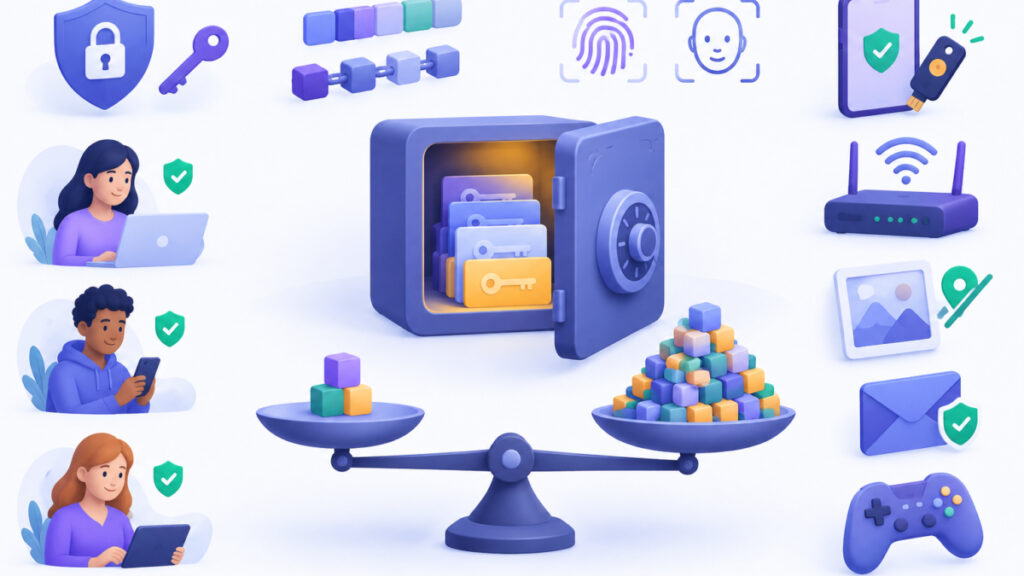
Fewer possible outputs is the real trade-off. A fixed pattern rules out many strings, because each position draws from a small group (consonants or vowels) instead of every letter. Entropy, which measures how many equally likely outcomes someone would have to consider, is therefore lower than for an unrestricted string of the same length.
Here is a hypothetical model. Assume each consonant position picks uniformly from 21 consonants, each vowel position picks uniformly from five vowels, and the pattern is CVCV repeated three times, giving 12 lowercase characters.
| Model | Possible outputs | Selection entropy |
|---|---|---|
| CVCV repeated three times (21 consonants, 5 vowels) | 21^6 x 5^6, about 1.34 trillion | About 40.3 bits |
| 12 independent lowercase letters (26 each) | 26^12, about 95 quadrillion | About 56.4 bits |
These are model-based figures, not measured entropy and not crack-time estimates for any tool. Different letter sets, weighting or filtering change the result. The Password Entropy Calculator uses a single character pool in its length-based formula, so it will not reflect a pattern like this one.
The gap is real, but it does not make every pronounceable result weak. Treat the pattern as a cost in possibilities and pay it back with length.

When does an easy-to-say password make sense?
Use one when you must type or say it yourself: a device login, a shared screen, or a credential read aloud. Easier recall means fewer typing mistakes and less temptation to fall back on a reused password.
If a reputable password manager will store and fill the password, you never need to say it. In that case an unrestricted result avoids the pattern limit entirely. The Secure Password Generator lets you set the length and character types, and it states that it generates in your browser with cryptographically secure random numbers.
Another memorable option is a short run of random words. The UK NCSC’s guidance from January 11, 2024 describes three random words as a memorable approach. It is not a like-for-like entropy match for a pronounceable string. My article on whether three random words meet the 15-character minimum covers the length side of that comparison.
Are pronounceable passwords secure enough for important accounts?
Length decides most of it. NIST SP 800-63B-4, published in July 2025, requires services to set a minimum of 15 characters when a password is the only authentication factor. It allows eight characters when the password is used only inside multifactor authentication. Those are verifier requirements, not a promise that any password at that length is safe.
NIST also prohibits extra composition rules and requires screening proposed passwords against common, expected or compromised values. CISA separately advises long, random, account-unique passwords of at least 16 characters. These two thresholds come from different sources, so do not treat them as one rule.
For a pronounceable pattern, that means repeating it more times instead of stopping at a minimum. For email, banking and the master password of your password manager, I would choose a fully random result or a much longer pronounceable one, plus two-factor authentication. If the numbers confuse you, read about the NIST 8 character password minimum with MFA and why websites still require symbols.
Appended digits or a symbol add possibilities, but because they sit in fixed positions and the symbol set is not published as a total, I would not count on a precise bonus.
How do you choose and use one safely?
- Decide whether you need to say or type it. If not, use an unrestricted random password.
- Generate your own fresh result with a tool. Never reuse a sample from an article.
- Pick enough length by adding pattern repeats, aiming for at least 16 characters for important accounts, in line with CISA.
- Keep it unique. One password per account limits the damage if a site is breached.
- Check for known exposure with the Password Leak Checker. It hashes in your browser and sends only the first five characters of the SHA-1 hash, a method called k-anonymity that lets a service match without seeing the full value. Only enter real passwords into tools whose behavior you understand.
- Turn on two-factor authentication or passkeys, which are device-tied logins that replace a typed password. The Password Safety Checklist is a printable list of actions to cover this week.
A not-found result does not certify a password as secure. Have I Been Pwned documents that a match means the password has appeared in breach data, but no match only means it was not in that data.
For developers: what makes a pronounceable generator trustworthy?
This section is for IT and web beginners. Look for three things. First, a secure random source, not a general-purpose one meant for games. Second, unbiased selection. Modulo bias happens when a random value is squeezed into a smaller range unevenly, so some outcomes become slightly more likely. Rejection sampling avoids it. Third, honest strength math based on the actual pattern, not a generic character pool.
Displayed strength or time-to-crack values depend on an assumed guess rate. The Password Strength Checker, for example, states an estimate at 10 billion guesses per second. That is an assumption for comparison, not an attack benchmark. Real exposure depends on how a service stores passwords, whether it limits guesses and whether your password was ever leaked.
Frequently asked questions
Are pronounceable passwords secure?
They can be. If the choices come from a cryptographically secure random source and the result is long and unique, a pronounceable password is reasonable. Because the pattern allows fewer outputs than unrestricted characters, it needs more length to match.
Does pronounceable mean predictable?
Not by itself. Predictable means a guesser can anticipate your choice. If each letter is picked randomly within the pattern, the pattern is known but the result is not. The cost is a smaller pool of possibilities.
Is a pronounceable password weaker than a random string of the same length?
Generally, yes in terms of possible outputs, since each position draws from a smaller group. In my hypothetical 12-character model, about 40.3 bits compared with about 56.4 bits. These are model figures, not crack times.
Can I shorten a pronounceable password to make it easier to remember?
I would not. Shortening cuts the possible outputs quickly. Add a pattern repeat instead, and pick your own generated result rather than a familiar word.
Should I use a pronounceable password with a password manager?
Usually an unrestricted generated password is better there, since you do not need to say or type it. Use a pronounceable one when you must enter or recall it by hand.
Does a clean breach check prove my password is secure?
No. Have I Been Pwned says a match means the password appeared in breach data. No match only means it was not found in that data, so length and uniqueness still matter.
Is a pronounceable password better than three random words?
They are different approaches, not an equal swap. The UK NCSC describes three random words as a memorable option. Compare lengths and the generation method rather than assuming equal entropy.
Next steps
So, are pronounceable passwords secure? They can be randomly generated and still useful, but the pattern limits the possible outputs, so you pay for ease of recall with extra length. Recap: generate your own, add pattern repeats, keep each password unique, check for known exposure, and turn on two-factor authentication. Use an unrestricted random password when a manager will fill it for you.
Related tools and resources on Password Ideas:
- Pronounceable Password Generator
- Secure Password Generator
- Password Entropy Calculator
- Password Leak Checker
- NIST 8 Character Password Minimum With MFA
Sources and further reading
- NIST Special Publication 800-63B
- SP 800-63-4, Digital Identity Guidelines | CSRC
- Pronounceable Password Generator
- Authentication – OWASP Cheat Sheet Series
- Using online services safely | Securing your users’ accounts | National Cyber Security Centre
- Cybersecurity Best Practices | Cybersecurity and Infrastructure Security Agency CISA
- Have I Been Pwned: Frequently Asked Questions
- Have I Been Pwned: API Documentation
- Crypto: getRandomValues() method – Web APIs | MDN