Password Strength and Entropy
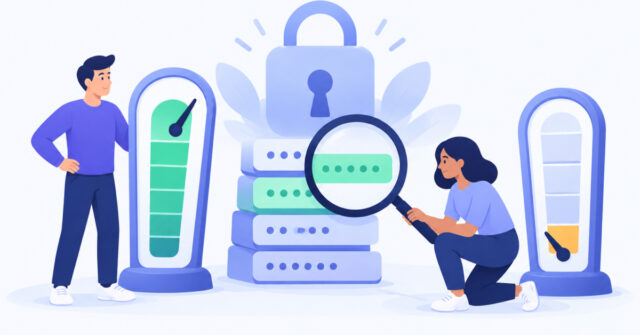
Password Strength Tester: How to Check a Password Without Sending It Anywhere
A password strength tester can show how guessable a password is without sending it to a server. Learn to read the results and fix weak ones.
Explainers on how password strength is measured, including entropy, strength scores, crack-time estimates and what the numbers do and do not tell you.
Password Strength and Entropy
A password strength tester can show how guessable a password is without sending it to a server. Learn to read the results and fix weak ones.
Password Strength and Entropy
An easy to type password on a phone may be a pronounceable one, but only sometimes. See how keyboard switches matter and why length still counts.
Password Strength and Entropy
Pronounceable password vs passphrase memorability is less clear-cut than it sounds. Learn what a 2012 study found and how to test both formats yourself.
Password Strength and Entropy
How long should a pronounceable password be? Learn the 15-character NIST minimum and why patterned letters call for extra length.
Password Strength and Entropy
Is a sentence a good password? A sentence adds length and memorability, but familiar word order can be predictable, so here is what to check and what to use.
Password Strength and Entropy
Is a song lyric a strong password? A familiar line is easy to remember but also easy to predict. See what to use instead and how to check your choice.
Password Strength and Entropy
Passphrase word list size and number of words both shape strength: learn why a smaller list usually needs more words to match.
Password Strength and Entropy
Capitalizing passphrase words adds little security when the casing follows a fixed rule. Learn why extra random words matter more and how to set yours up.
Password Strength and Entropy
Add number or another word to passphrase? A random extra word adds about 12.92 bits, a random digit about 3.32, and a fixed suffix none.
Password Strength and Entropy
Passphrase spaces vs hyphens comes down to what you can type and read easily. See how separators affect entry, and what actually protects you.
Password Strength and Entropy
Can I change a word in a generated passphrase? Yes, but a hand-picked swap is less random. See why, and what to do with a word you dislike.
Password Strength and Entropy
Are pronounceable passwords secure? A random generator can still make them, but a fixed pattern allows fewer outputs, so length and uniqueness matter.
Password Strength and Entropy
Is a keyboard smash a strong password? Learn why chaotic-looking typing still follows human habits and how to get truly random characters instead.
Password Strength and Entropy
Six digit PIN vs password security comes down to who checks the secret and what limits guesses. Learn why a PIN suits a phone but not a website login.
Password Strength and Entropy
Are password crack time estimates accurate? See why “years” is a model, how online and offline attacks differ, and what to do beyond the number.
Password Strength and Entropy
Does excluding ambiguous characters weaken a password? Learn the small entropy cost, why one extra character covers it, and how to set up your generator.
Password Strength and Entropy
NIST 8 character password minimum with MFA is a permitted floor for services, not a target. See what it means and how to choose a longer, unique password.
Password Strength and Entropy
Why do websites require symbols in passwords when NIST says not to? Learn how site rules differ from guidance and how to meet them.
Password Strength and Entropy
Three random words can meet the 15 character password minimum, but only if the total length reaches 15. Learn how to count it and generate a longer option.
Password Strength and Entropy
Is a random password without symbols strong enough? Learn when 16 or more truly random letters hold up and how to generate your own.
Password Strength and Entropy
High password entropy but weak strength score can both be right: one measures possible combinations, the other spots patterns. Learn how to fix it.